
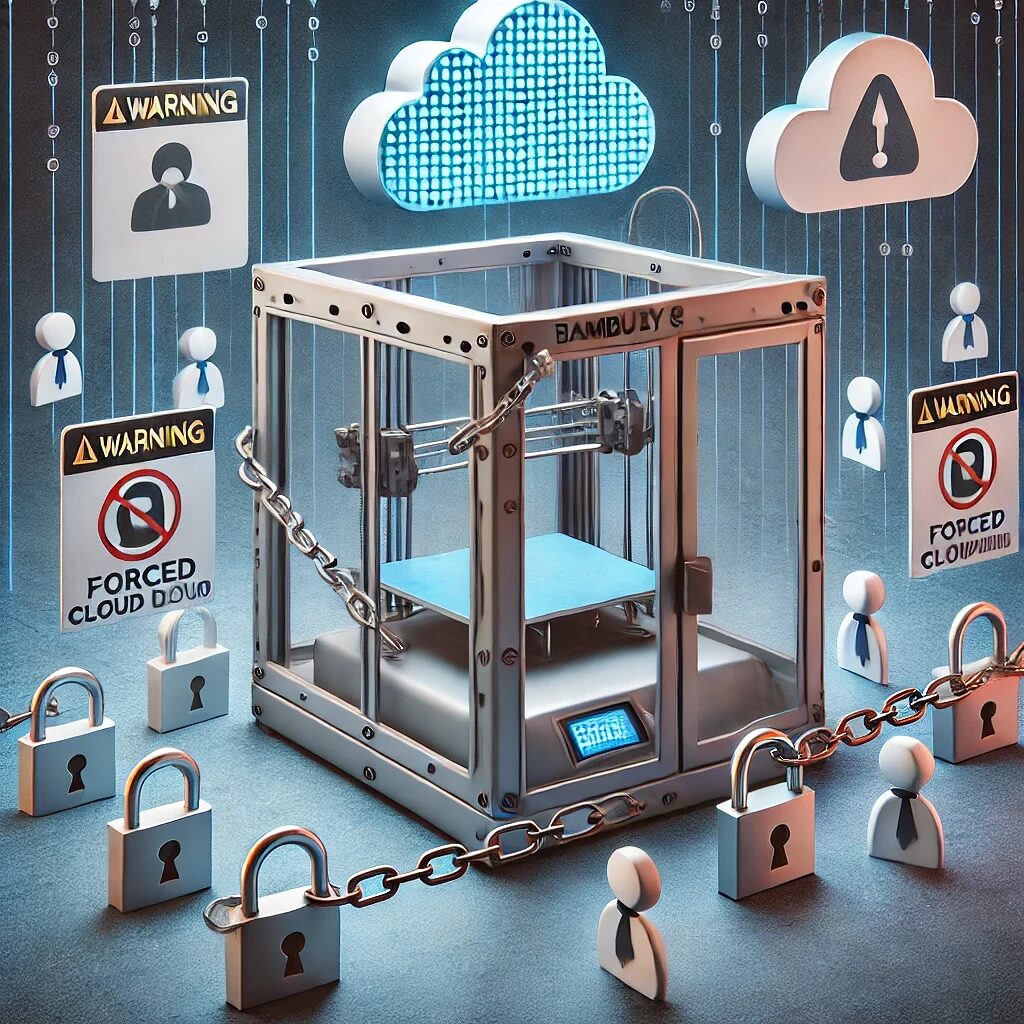
In January 2025, Bambu Lab—one of the fastest-growing innovators in the 3D printing industry—ignited widespread controversy with a new Bambu Lab firmware update impacting its flagship X1, P1, and A1 printer series. The update introduced a mandatory authorization and authentication system, leaving thousands of users questioning Bambu Lab’s commitment to open-source principles, privacy, and customer choice.
In this deep dive, we break down the technical changes, community reaction, and broader implications for 3D printing professionals, print farm operators, and technology enthusiasts, alongside the concerns raised about open-source values, data privacy, and vendor lock-in.
What Changed in the Bambu Lab Firmware Update?
The January 2025 firmware update requires users to install a proprietary app called Bambu Connect to access essential features, especially when using third-party slicers like OrcaSlicer and open-source tools. Without Bambu Connect, users lose access to:
- Remote printer control (via LAN or cloud)
- Initiating print jobs over the network
- Printer configuration and monitoring
Bambu Lab’s official stance:
“Unauthorized third-party software will be prohibited from executing critical operations. This is to protect against cyberattacks and unauthorized access. Our servers receive up to 30 million unauthorized requests daily.” — Bambu Lab
Bambu Lab frames this change as a security measure to counteract escalating cyber threats and bot attacks targeting their ecosystem. However, the new system effectively enforces vendor lock-in, tying key printer functions to Bambu’s proprietary infrastructure.
Community Reaction: Open Source Values and Data Privacy at Stake
Open-Source Concerns
Many in the maker and engineering communities see this as a betrayal of the open principles that made desktop 3D printing an innovation hotbed.
This move echoes the notorious 2012 pivot of MakerBot, whose shift away from open-source sparked community outrage and, arguably, led to their loss of market leadership.
Data Privacy and Control
Routing printer operations through Bambu Connect has stoked widespread privacy concerns. Users worry about:
- Unintended data collection
- Remote control and monitoring by Bambu Lab
- Potential future restrictions (e.g., on third-party filaments or hardware add-ons)
- The possibility of forced subscriptions or paid “premium” features
Some power users and print farms report operational disruptions—with critical workflows broken for software like OrcaSlicer and Panda Touch that now face compatibility issues. Big Tree Tech, makers of the Panda Touch, released this FAQ to help address questions.
Vendor Lock-In and Workflow Disruption
- Print farms and engineering teams using non-Bambu slicers are suddenly forced to rely on Bambu’s app, risking downtime, reduced productivity, and increased operational complexity.
- Concerns about “walled gardens” and long-term device ownership are front and center.
Bambu Lab Responds
Amid the backlash, Bambu Lab released an official statement clarifying several points in a blog post:
- LAN Mode: Bambu Connect does not require internet access or a user account for local network (LAN) usage.
- Developer Mode: A new Developer Mode allows advanced users to bypass Bambu Connect, restoring access to legacy protocols like MQTT and FTP for integration with open-source slicers and custom automation scripts.
- Firmware Rollback: Users are permitted to roll back firmware to previous versions if desired.
- Rumors Addressed: Bambu Lab denied rumors about remote printer bricking (“kill switches”) or mandatory subscriptions.
OrcaSlicer Dispute: Miscommunication or Misdirection?
Early communications suggested OrcaSlicer’s developer was working closely with Bambu Lab to support Bambu Connect. However, OrcaSlicer’s team later denied any formal collaboration, leaving many users confused and frustrated. If you’re unfamiliar with OrcaSlicer, check out our in depth review of it and other slicers here: In-depth Comparison of 3D Printing Slicers: Orca Slicer, PrusaSlicer, and BambuSlicer.
Further, reports of Bambu Lab censoring Reddit threads and blocking archival services like the Wayback Machine have only fueled distrust within the community.
Geopolitics and Data Security: A Deeper Look
Some users point to Bambu Lab’s financial backing from IDG Capital, a Chinese investor with historic ties to China’s defense sector. This raises:
- Questions about compliance with China’s National Intelligence Law (which can mandate cooperation with state intelligence)
- Concerns about the privacy of user data—especially for institutional or corporate 3D printer users outside China
While Bambu Lab insists on safeguarding user privacy, skepticism remains among privacy-conscious engineers and organizations.
The Bigger Picture: Security vs. Freedom in 3D Printing
This episode underscores a core tension in today’s connected manufacturing landscape:
How do we balance cybersecurity with user freedom and innovation?
- Security: As 3D printers become more networked, the risk of bot attacks and vulnerabilities is real—especially for print farms and businesses.
- Openness: The 3D printing revolution was built on transparency, interoperability, and user control.
With competitors like Prusa and Creality doubling down on open-source firmware and community-driven development, many are re-evaluating their next printer purchase.
What Should Engineers, Makers, and Businesses Do Next?
- Evaluate your workflow: If you rely on third-party slicers or print farm automation, test compatibility before updating firmware.
- Monitor vendor policies: Stay informed about firmware updates, end-user license agreements (EULAs), and the fine print.
- Demand transparency: Support brands committed to open standards, transparent communication, and user rights.
- Consider alternatives: If openness is a priority, research competing platforms and their developer engagement before investing.