
Bambu Lab’s Next Flagship 3D Printer: The H2D
Excitement is mounting in the 3D printing community as leaks and insider information hint at a new flagship printer from Bambu Lab—the H2D. While the company has yet to make an official announcement, recent trademark filings for “H2D” and “AMS 2” suggest that these names are official, further fueling speculation about the printer’s imminent release.

Key Features and Specifications
- Larger Build Volume: Rumored to be around 333 x 333 x 366 mm, a significant jump from Bambu Lab’s current lineup.
- Dual Nozzle System: A gantry-mounted dual-nozzle setup that minimizes material waste and enhances multi-material printing.
- Enclosed Heat Chamber: Designed to support a broader range of filament types, including high-temperature materials.
- Advanced AMS 2 Pro: The redesigned Automatic Material System (AMS) is expected to support up to 16 colors and feature material drying capabilities.
- Officially Trademarked: Bambu Lab has recently trademarked “H2D” and “AMS 2”, adding credibility to the leaks and confirming that the names are more than just speculation.

H2D =2 Tool Heads
One of the most intriguing aspects of the H2D is its dual-nozzle tool head. Unlike independent dual extruder (IDEX) systems that rely on separate tool heads moving independently, this design could make filament switching more efficient while maintaining a compact and lightweight gantry.
A single tool head with two nozzles brings several advantages:
- Faster filament switching compared to traditional single-nozzle setups.
- More cost-effective than multiple independent tool heads.
- Potential backward compatibility with older Bambu Lab models.
- Less waste and improved print efficiency by reducing purge material.
However, several questions remain:
- How will it handle materials with different melting points? Will there be independent temperature controls for each nozzle?
- Will filament changes be seamless? Or will the system need frequent purging and priming?
- How will Bambu Lab implement this within its ecosystem? Will it support third-party filaments effectively?
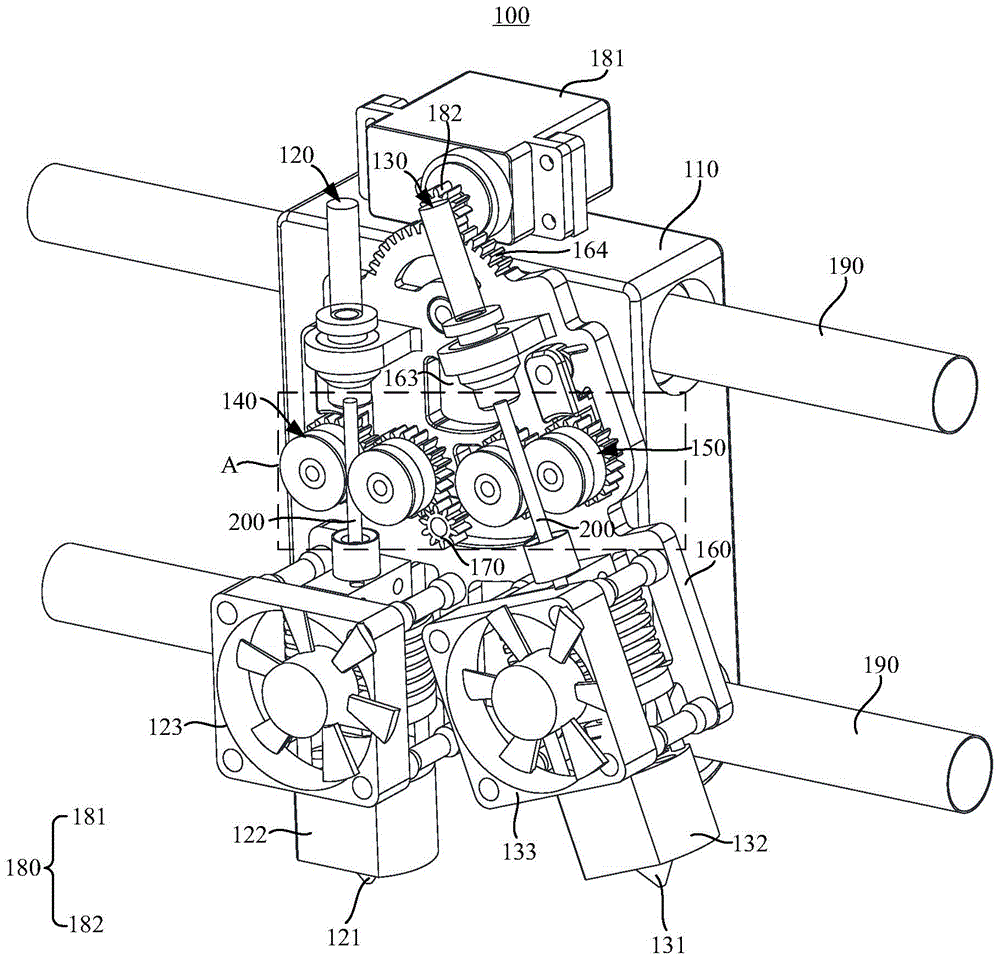
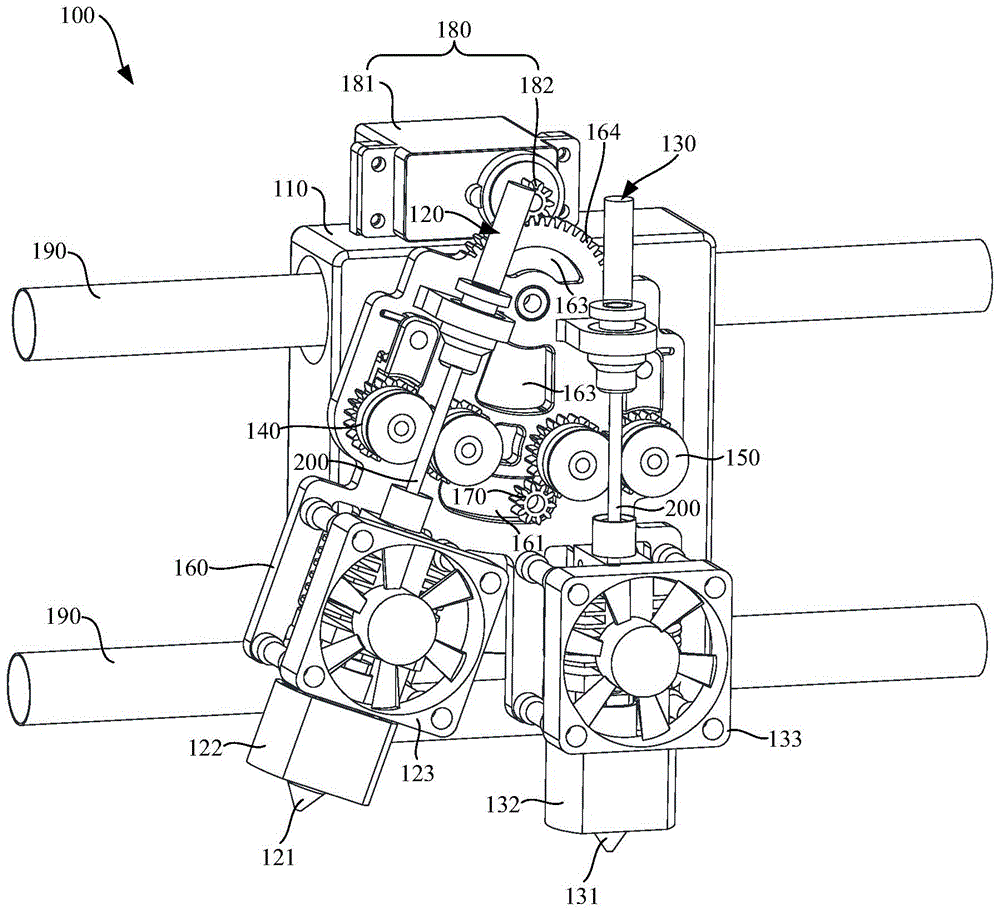
Interestingly, a recently published Bambu Lab patent provides insights into how this dual-nozzle system might work. The patent describes a printing head device with:
- Two extruders and two print heads mounted on a shared plate.
- A single motor-driven gear system that switches between extruders.
- A mounting plate that shifts between two positions, engaging one extruder at a time.
- A simplified design that eliminates the need for an additional motor.
By using one driving mechanism for both print heads, Bambu Lab could reduce complexity and manufacturing costs while maintaining high performance. They also have published a patent showing how an AMS hub could feed two extruders.
How Does the H2D Compare to the Competition?
With its rumored specs, the H2D appears to compete directly with models like the Prusa XL and Creality K2 Plus. While the Creality K2 Plus boasts a slightly larger print area, it lacks the dual-nozzle technology and refined ecosystem of Bambu Lab. The Prusa XL, on the other hand, is modular and highly customizable but may not be as plug-and-play friendly as the H2D.
Pricing Speculation
Industry insiders estimate that the H2D could be priced between $2,799 and $2,999, positioning it between high-end consumer and professional-grade 3D printers. This price range would place it above the X1E ($2,499) but below industrial models like the Ultimaker S7.
Conclusion
If the rumors hold true, the Bambu Lab H2D could be a game-changer for both enthusiasts and professionals. With its increased build volume, dual-nozzle system, and AMS 2 Pro, it offers a compelling blend of usability and advanced features.
Would you invest in the Bambu Lab H2D?